
How Often Should You Water Cannabis? Why There’s No Fixed Answer
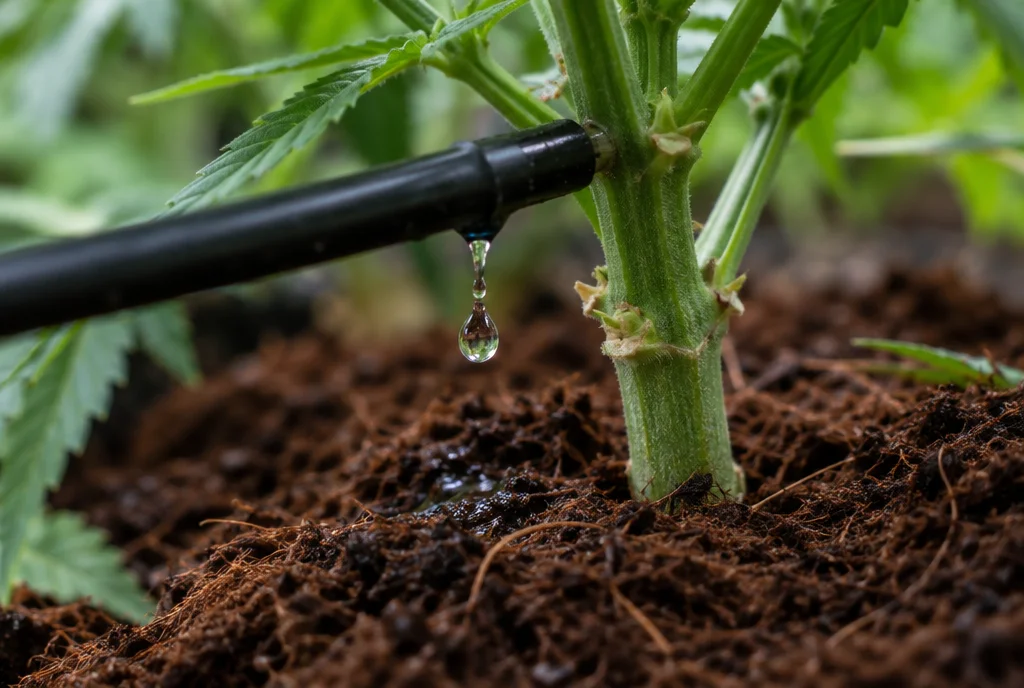
Every two days? When the top of the pot feels dry? Once a day in flower? Ask ten growers how often to water cannabis and you’ll get ten different answers. Watering is one of the most common places first grows go wrong, and the grower is rarely careless. Usually, they’re trying too hard.
What Overwatering Really Means
Roots need oxygen as much as they need water. When the medium stays soaked, the air pockets between particles fill with water and the roots start to suffocate. The plant droops, which looks exactly like thirst, so the grower waters again. Leave it long enough and you get slow growth, yellowing, fungus gnats and eventually root rot.
Underwatering causes its own problems. The plant wilts, growth stalls, and as the medium dries out, the nutrients left behind become more concentrated around the roots. The plant ends up stressed on two fronts at once.
Why a Fixed Schedule Fails
A plant’s thirst changes constantly. A seedling takes small sips. A large plant in flower can drink many times more. On a warm day with the light at full power, it drinks more than on a cool one. A schedule that’s perfect in week three can be drowning the plant, or starving it, by week six.
That’s why experienced growers water the plant, not the calendar.
How Professionals Water
Commercial growers rely on three ideas:
- Drain-to-waste. Give enough water that a little drains out of the bottom of the pot. That runoff carries away excess salts, so they can’t build up, and it’s thrown away instead of being reused. Every feed starts fresh.
- Measuring the runoff. How much water comes out tells you how much the plant drank. Lots of runoff means it got more than it needed. Barely any means it’s thirsty and the next watering should be bigger.
- Crop steering. The irrigation rhythm itself sends a signal. Frequent, gentle watering encourages leafy, vegetative growth. Letting the medium dry back more between feeds nudges the plant toward producing flowers. We wrote more about this in Crop Steering: The Secret to Growing Better Cannabis.
None of this is complicated in principle. In practice, at home, it means weighing pots, measuring runoff in a jug, keeping a log and adjusting every few days. Few hobby growers keep it up for a whole grow.
How We Solved It for Sunday
We built that professional approach straight into the box. Sunday uses two tanks: you pour fresh water into the first, and Sunday mixes each irrigation batch in the second, dosing nutrients and adjusting pH automatically. The batch reaches the roots through drip lines, with timing and volume based on your plant’s stage of growth.
Sunday is drain-to-waste, too. Excess water is pumped into a separate runoff container for easy disposal, so old water never goes back to the roots. And every day, Sunday measures the runoff and adjusts the watering to match how much your plant actually drinks, avoiding both overwatering and underwatering. As the plant grows thirstier, Sunday keeps up.
The crop steering techniques of the expert growers we designed Sunday with are built into every grow protocol. If you want to go further, you can use Sunday’s wireless pH & EC sensor to check the runoff’s chemistry as well as its volume. We explain why that matters in pH and EC, Explained.
Your part is filling the water tank at the start of the grow, then roughly once a week after that. The app tells you when.
The Takeaway
Forget the schedule. Let the medium breathe between waterings, water until a little runs out, and pay attention to how much comes back. Your plant is telling you how thirsty it is. The trick is listening every single day.
Let Sunday do the growing
Sunday automates light, climate, watering and feeding, the way the pros do it. Join the waitlist to be first in line when pre-orders reopen.