
How Much Light Does Cannabis Really Need? More Isn’t Always Better
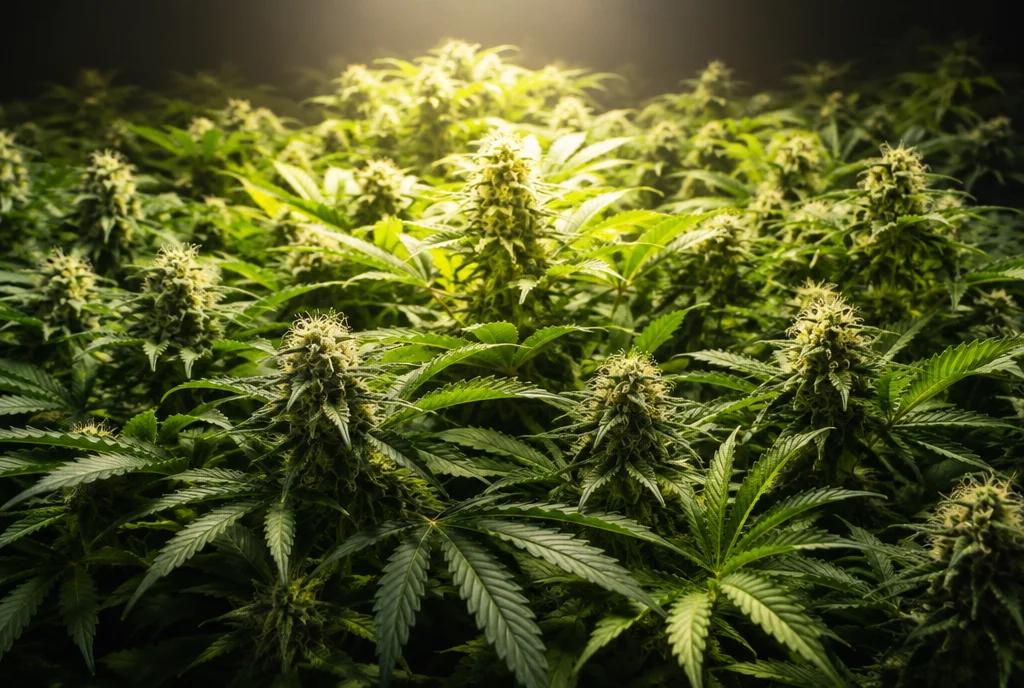
A lot of first-time growers do the same thing: buy the brightest light they can afford and hang it as close to the plant as they dare. More light, more buds, right? Then the tops turn pale, the leaves curl up, and the plant looks worse than it did under a weaker lamp.
Light is the most important input in any grow. It’s the energy the plant builds every leaf and bud from. But plants can only use so much of it, and how much they can use changes as they grow.
Measuring Light the Way Plants See It
Lumens and watts describe light for human eyes and electricity bills. Plants care about something else: the number of photons they can use for photosynthesis. Growers measure that as PPFD (photosynthetic photon flux density), in micromoles per square meter per second (μmol/m²/s). It tells you how much usable light lands on the leaves at any moment.
Because intensity alone doesn’t capture the length of the day, growers also talk about DLI (daily light integral): the total amount of light the plant receives across the whole day. A plant under bright light for a short day and one under softer light for a longer day can end up with a similar DLI.
What Each Stage Wants
Exact numbers vary by strain and setup, but these are common rough targets:
- Seedlings and clones: around 200 to 400 μmol/m²/s. Too much light stresses young plants that can’t drink much yet.
- Vegetative growth: around 400 to 600 μmol/m²/s, building leaves, branches and roots.
- Flowering: around 600 to 900 μmol/m²/s or more. Without added CO₂, many growers find the gains level off somewhere near the top of that range.
Distance Changes Everything
Here’s the catch with a fixed light: intensity drops quickly as distance grows, and your plant gets closer to the light every week. The same lamp at the same setting delivers more and more light to the top of the canopy until, one day, it’s too much. That’s where bleached, curled tops come from.
Manual growers fight this by raising the light every few days, dimming it by hand and measuring with a PAR meter. Miss a few days of fast growth and the plant has already caught up with the lamp.
Spectrum Matters Too
Plants use different colors of light for different jobs. A full spectrum supports healthy growth from seedling to harvest. Blue light in particular keeps plants compact and sturdy, with tight spacing between branches, which is exactly what you want in a small space.
How We Solved It for Sunday
We wanted the light to follow the plant, not the other way around. Sunday’s full-spectrum LED dims smoothly from 0 to 100% and adjusts its intensity automatically, based on the plant’s growth stage, its height and its distance from the light. Height is measured by Sunday’s onboard cameras, so as the canopy rises, the light adapts to keep PPFD in the optimal range. You never have to raise a lamp.
Sunday also keeps track of the daily dose. Once your plant has received enough light for the day, Sunday gradually dims down. Your plant isn’t stressed by light it can’t use, and you don’t pay for it either.
The specs behind it:
- 100W max power LED
- PPFD: 963 μmol/m²/s
- Efficiency: 2.7 μmol/J, so more of your electricity becomes plant growth instead of heat
- Dimmability: 0–100%
- Full spectrum for all phases of growth
- Blue-enhanced spectrum to improve plant morphology and quality
The Takeaway
More light is only better up to a point. Match the intensity to the stage, keep an eye on the distance as your plant grows, and think about the whole day, not just the brightest moment. Get that right, and the plant does the rest.
Let Sunday do the growing
Sunday automates light, climate, watering and feeding, the way the pros do it. Join the waitlist to be first in line when pre-orders reopen.