
Home-Grow Cannabis Laws by US State (October 2026)
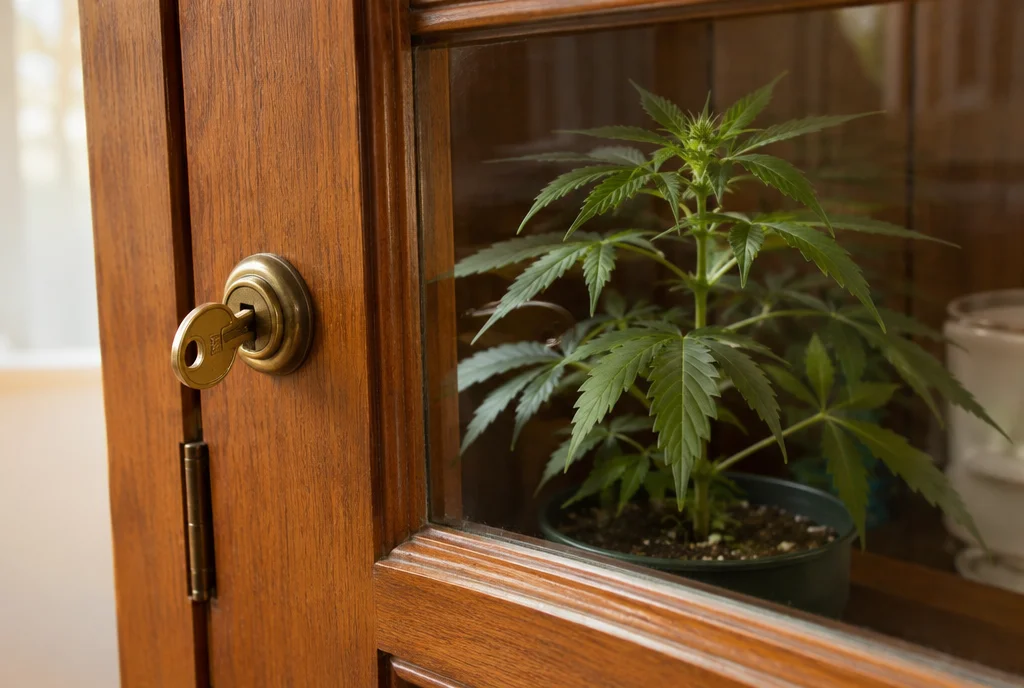
Can you legally grow cannabis at home where you live, and if so, how many plants? The answer depends entirely on your state, and the differences are bigger than most people expect: some states allow 12 plants per home, some allow two, some require a registration card, and several states where you can legally buy cannabis don’t let you grow a single plant.
We summarized every state’s rules from official sources, mainly state statutes and state cannabis agencies, as of October 2026.
Important: this article is general information, not legal advice. Laws change often, and cities, counties, landlords and homeowners’ associations can add their own rules. Before you plant anything, read the current law for your state using the official links below, and talk to a lawyer if you’re unsure.
A Few Terms First
- Per person vs. per residence. Some states set a limit for each adult, plus a cap for the whole household. Others set one limit for the home, no matter how many adults live there.
- Mature vs. immature. “Mature” usually means a plant that’s flowering. Many states allow more immature plants than mature ones.
- Locked or enclosed space. Most states require plants to be in a space with a lock or other security device, especially to keep out anyone under 21.
- Out of public view. Most states require that plants can’t be seen from a public place without binoculars or other optical aids.
The Federal Picture
Under federal law, growing cannabis at home is still illegal. In April 2026, the federal government moved FDA-approved marijuana products and marijuana under state medical marijuana licenses from Schedule I to Schedule III of the Controlled Substances Act. Adult-use (recreational) marijuana remains Schedule I, and a broader rescheduling review was still underway when we wrote this. State laws protect home growers from state penalties only.
That matters most if you live in federally assisted housing. HUD has long held that public housing agencies and owners of federally assisted housing may not allow residents to grow or use marijuana, even where state law allows it.
States Where Adults 21+ Can Grow at Home
| State | Plant limit | Key rules | Official source |
|---|---|---|---|
| Alaska | 6 per adult (max 3 mature); 12 per home (max 6 mature) | Not visible to the public without optical aids; reasonable precautions against unauthorized access; only on property you lawfully possess or with the owner’s consent | AS 17.38.020–.030 |
| Arizona | 6 per adult; 12 per residence with 2+ adults | At your primary residence; in a closet, room, greenhouse or other enclosed area with a lock that prevents access by minors; not visible from public view | A.R.S. 36-2852 |
| California | 6 living plants per residence | Locked space; not visible from a public place; cities and counties may regulate home grows and may ban outdoor growing, but can’t ban growing inside a home | H&S Code 11362.2 |
| Colorado | 6 per adult (max 3 flowering); 12 per residential property | Enclosed, locked space; if anyone under 21 lives in the home, the grow area itself must be locked; local rules can be stricter | C.R.S. 18-18-406 |
| Connecticut | 3 mature + 3 immature per adult; 12 total per household | Indoors at your primary residence; secured, locked area not visible from the street; out of reach of anyone under 21 | CT cannabis portal |
| Maine | 6 mature + 12 immature + unlimited seedlings per adult | Not visible from a public way; reasonable precautions against access by anyone under 21; a tag on each plant with your name, ID number and a note that it’s grown for personal adult use | 28-B MRSA §1502 |
| Maryland | 2 per household (registered medical patients: up to 4 per household) | Not visible from public view, including from other private property; enclosed, locked space that people under 21 can’t access | Maryland Cannabis Administration |
| Massachusetts | 6 per adult; 12 per residence | Area with a lock or other security device; not visible from a public place without optical aids | M.G.L. c.94G §7 |
| Michigan | 12 per residence | Enclosed area with locks or other security devices; not visible from a public place without optical aids | MCL 333.27955 |
| Minnesota | 8 per residence (max 4 mature, flowering) | At your primary residence; enclosed, locked space not open to public view | Minn. Stat. 342.09 |
| Missouri | With a cultivation card: 6 flowering, 6 non-flowering (14"+) and 6 clones (under 14") per card; max 12 of each per residence | You must first get a consumer personal cultivation card from the state (valid 12 months); grow at a private residence in an enclosed, locked facility; label flowering plants with your name | Missouri DHSS |
| Montana | 2 mature + 2 seedlings per adult; max 4 + 4 per residence | Locked space; not visible from a public place; you must own the home or have written permission from the owner | MCA 16-12-106 |
| Nevada | 6 per adult; 12 per household | Only if you live more than 25 miles from a licensed adult-use retail store; enclosed, locked area; not visible from a public place; own the property or have the owner’s permission | NRS Chapter 678D |
| New Mexico | Up to 12 per adult (max 6 mature); max 12 mature per household | Locked space at your private residence; not visible from a public place | NM Regulation & Licensing Dept. |
| New York | 3 mature + 3 immature per adult; max 6 + 6 per residence | Secure place, inaccessible to anyone under 21; reasonable measures to keep odor from bothering neighbors, such as a carbon filter; apartments and rentals are allowed | NY Office of Cannabis Management |
| Ohio | 6 per adult; 12 per residence | At your primary residence; secured, enclosed area that prevents access by anyone under 21; not visible from a public space; not allowed in a rental if the rental agreement prohibits it (rules revised by SB 56, effective March 20, 2026) | ORC 3796.04 |
| Oregon | 4 per household | Limit is per household, regardless of how many adults live there | OLCC FAQ |
| Rhode Island | 3 mature + 3 immature per dwelling unit | Locked area that limits access, including by anyone under 21; reasonable efforts to keep plants out of view of the street and to keep odors from leaving the grow | RI regulation 560-RICR-10-15-1 |
| Vermont | 2 mature + 4 immature per dwelling unit | Screened from public view; access limited to you and adults 21+ you allow; on property you lawfully possess or with the owner’s written consent | 18 V.S.A. §4230e |
| Virginia | 4 per household | At your main place of residence; not visible from a public way; precautions against access by anyone under 21; a tag on each plant with your name, driver’s license or ID number and a note that it’s for personal use | Va. Code §4.1-1101 |
Washington, D.C. isn’t a state, but adults 21+ there may grow up to 6 plants (max 3 mature) in their primary residence, with no more than 12 (max 6 mature) per household. (DC Office of the Attorney General)
States Where Only Medical Patients Can Grow
In these states, adult-use home growing is not allowed (or there’s no adult-use law), but registered medical patients can grow a limited number of plants.
| State | Who can grow and how much | Key rules | Official source |
|---|---|---|---|
| Hawaii | Registered patients: up to 10 plants | Grow site registered with the state medical cannabis program | Hawaii DOH |
| Illinois | Registered medical patients 21+: up to 5 plants taller than 5 inches per household | Enclosed, locked space; not in public view; with the property owner’s consent. Home growing by non-patients is illegal | Illinois Cannabis Regulation FAQ |
| Oklahoma | Licensed patients: 6 mature plants + 6 seedlings | On property you own or with the owner’s written permission; not visible from the street | OMMA |
| South Dakota | Cardholders approved for home cultivation: 2 flowering + 2 non-flowering | Must apply for cultivation authorization; enclosed, locked facility | SD Department of Health |
| Washington | Medical patients: 4 plants, or 6 if registered (up to 15 with a practitioner’s authorization); max 15 per housing unit | Growing by adults who aren’t qualifying patients is a felony | WA Liquor and Cannabis Board |
Many of the adult-use states above also give medical patients higher limits than the ones shown. If you’re a registered patient, check your state’s medical program rules.
States Where Home Growing Is Not Allowed
Legal to buy, but not to grow:
- Delaware. Adult use is legal, but the state says all plant production is restricted to licensed cultivation facilities. (Delaware OMC)
- New Jersey. Adult use is legal, but home growing isn’t, including for medical patients. (NJ Cannabis Regulatory Commission)
Medical programs without home growing: Alabama, Arkansas, Florida, Kentucky, Louisiana, Mississippi, Nebraska, New Hampshire, North Dakota, Pennsylvania, Utah and West Virginia have medical cannabis laws that don’t allow patients to grow at home. Patients get cannabis from licensed businesses instead. Several of these states considered home-grow bills recently. New Hampshire’s House passed one in 2025, for example, but the Senate rejected it, so check for changes.
No legal home growing at all: Georgia, Idaho, Indiana, Iowa, Kansas, North Carolina, South Carolina, Tennessee, Texas, Wisconsin and Wyoming. Some of these allow limited low-THC or CBD products, but none allows growing cannabis at home.
Rules That Apply Almost Everywhere
Even in the most permissive states, a few rules show up again and again:
- You must be 21 or older (medical programs set their own ages).
- You can’t sell what you grow. Gifting small amounts is allowed in some states, but selling homegrown cannabis is illegal everywhere on this list.
- No butane or other flammable solvents. Several states, including California, Massachusetts and New York, specifically ban making concentrates at home with volatile solvents.
- Local rules can be stricter. Cities and counties can often limit or regulate home grows, especially outdoors.
- Your lease matters. Landlord rights vary a lot by state. We cover renters in detail in How to Grow Cannabis in an Apartment, Discreetly.
How We Thought About This for Sunday
Almost every state that allows home growing asks for the same three things: keep plants in an enclosed, locked space, keep them away from anyone under 21, and keep them out of public view. Those rules are also simply good sense in a shared home.
That’s why Sunday is built as an enclosed wooden cabinet with an app-controlled child safety lock. The plant, the nutrients and the pH adjusters all stay behind a locked door that you open from your phone. A carbon filter on the exhaust keeps the smell inside, which helps in states like New York that ask growers to keep odor from bothering the neighbors. And Sunday’s cameras let you check on the plant without opening the door.
Sunday helps you grow responsibly, but it can’t tell you what your state allows. Plant limits, registration cards and distance rules are your responsibility, so check your state’s current law before you start. Sunday hasn’t started shipping yet. Deliveries will begin in the US, and you can join the waitlist for the next batch.
The Takeaway
As of October 2026, adults can grow at home in 20 states plus Washington, D.C., medical patients can grow in a handful more, and the rest don’t allow home growing at all. Limits range from 2 plants per household in Maryland to 12 per home in places like Michigan and Alaska, and the details, from locks to plant tags to registration cards, really matter. Laws change, so treat this as a starting point: follow the official link for your state, read the current rules, and grow within them.
Let Sunday do the growing
Sunday automates light, climate, watering and feeding, the way the pros do it. Join the waitlist to be first in line when pre-orders reopen.